

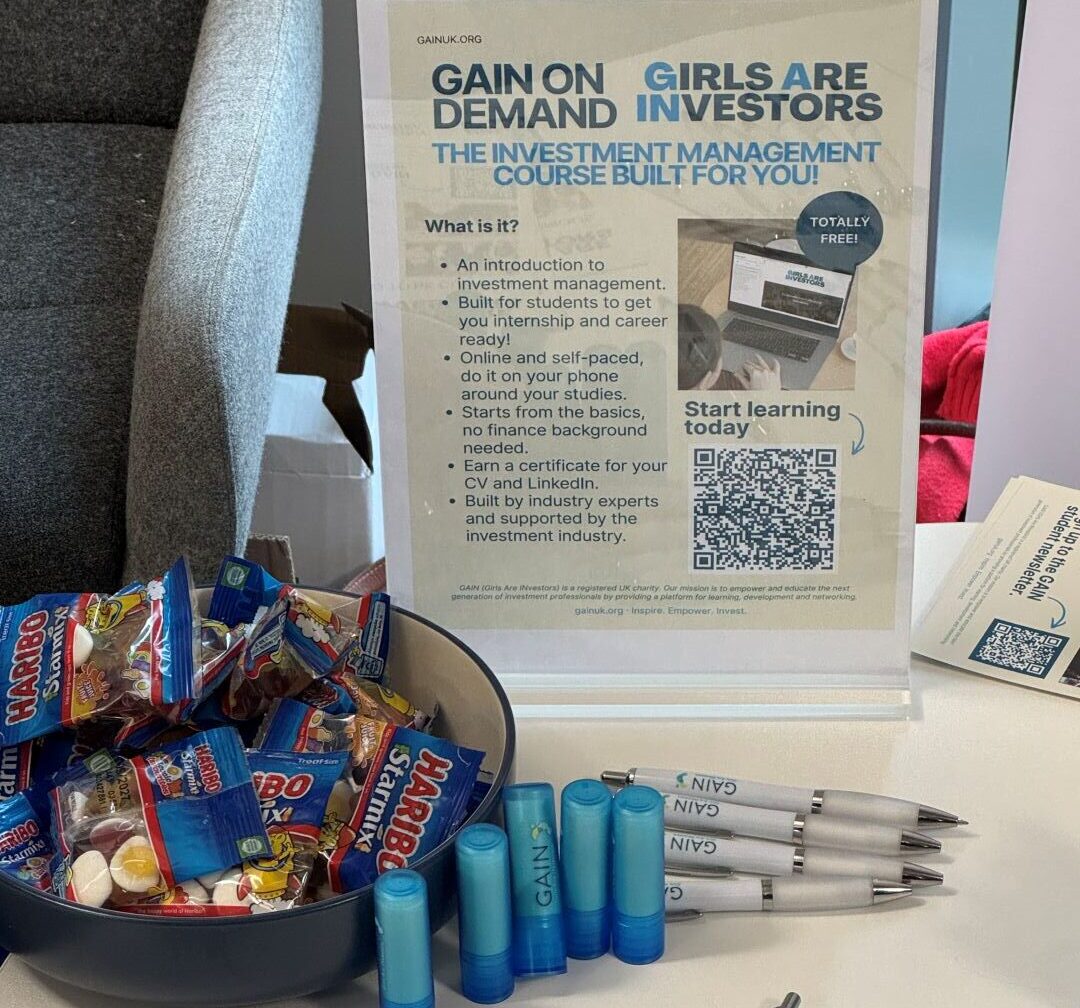
Now in my third year of Business and Management, I’ve found that thinking about my career has become less of an occasional worry and more of a constant companion. Internships across different areas of business, including a particularly enjoyable one at Amex GBT, have each sparked a little more curiosity about how other industries operate and where my own path might lead. So when the Careers & Enterprise team invited students to attend the Business, Finance and Consulting Fair, it felt like an opportunity worth taking.
Preparation
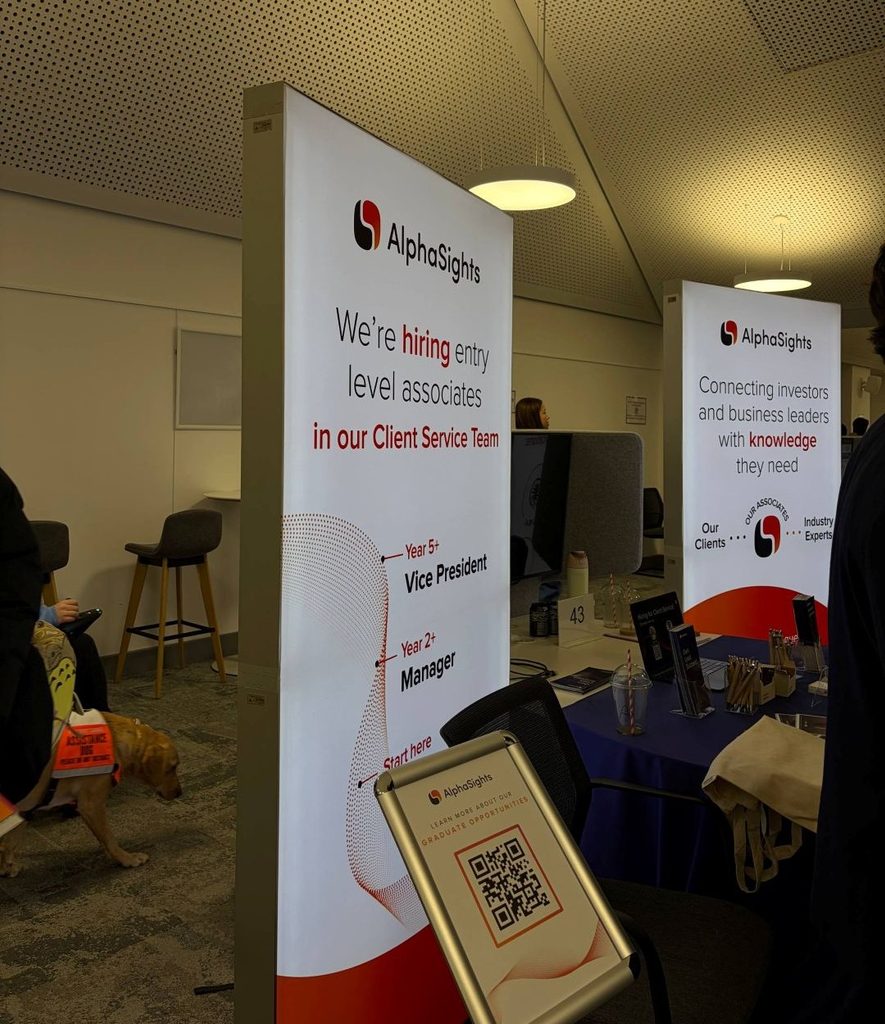
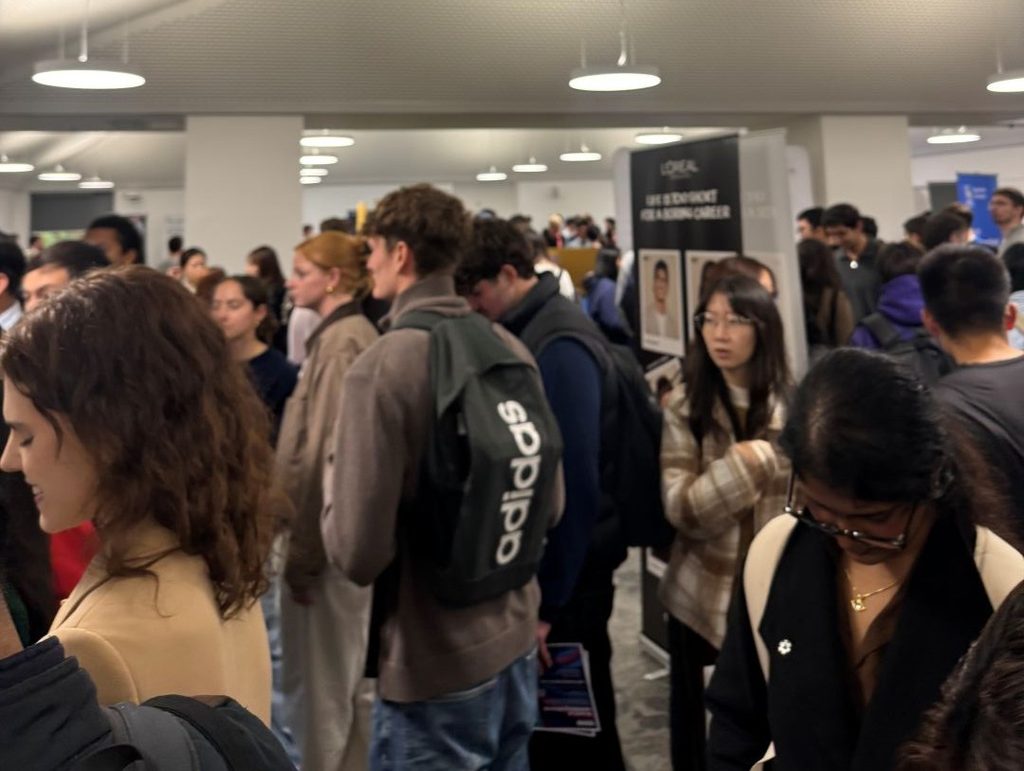
The room was busier and more relaxed than I’d expected, with friendly representatives and genuinely engaged students asking questions and comparing notes. I spoke to a number of companies over the afternoon, but I deliberately focused my time on four: EY, Newton, OC&C and Azets. These were the firms I most wanted to understand, so I had researched them beforehand and arrived with specific questions for each. That preparation made a noticeable difference. Instead of hearing a general pitch, I could steer each conversation toward what mattered to me. Because the four are so different, spanning one of the Big Four, a strategy consultancy, an operational improvement specialist and an accounting and advisory firm, those conversations also revealed contrasts I would never have picked up from their websites. A website shows you the version of a company it wants you to see; a conversation lets you test it. How someone answers, what they light up about and what they pass over quickly, often tells you as much as the answer itself. The lesson for any student is simple: choose your firms, prepare your questions, and treat each conversation as a chance to learn something you couldn’t find online.
Top tips
Opportunities, unsurprisingly, varied from firm to firm. Each had its own programmes, timelines and idea of the ideal candidate. Nobody walks you through an assessment process at a stand, but the representatives were open about what they value. What I hadn’t fully appreciated is how useful these conversations become later on. Almost every application asks some version of “why this firm?”, and answers drawn from a company’s website are easy to spot. A detail someone shared in person, about their own work, the culture or what drew them to the firm, is far more convincing. That’s why it’s worth noting down names and specifics as soon as you step away, before the conversations start to blur. The same applies to LinkedIn. Connecting before I left was the most useful thing I did all afternoon, but a connection only becomes valuable once you use it: a short, personal message referencing your conversation will be remembered, while a blank request among dozens will not. This is what changed my view of careers fairs most. It’s tempting to see one as a room full of stands to walk past, but it works far better as a tool: a source of insight for applications, contacts for your network and answers you can’t find online.
A great event
So was it worth going? On balance, very much so, and a good deal of the credit belongs to the Careers & Enterprise team. Good organisation is easy to take for granted when it works, but it shaped my experience more than I expected. From the outset, it was clear where to go and how to navigate the room, so I could focus my energy on conversations rather than logistics, and the staff were consistently welcoming and on hand to help. That matters more than it might seem. For students at their first fair, or those who find networking daunting, an approachable environment can be the difference between engaging confidently and quietly leaving after ten minutes. Good organisation also let the fair do what it does best: provide access. In one afternoon I had direct, candid conversations that would otherwise have taken weeks of LinkedIn messages, with no guarantee of a reply.
My takeaways
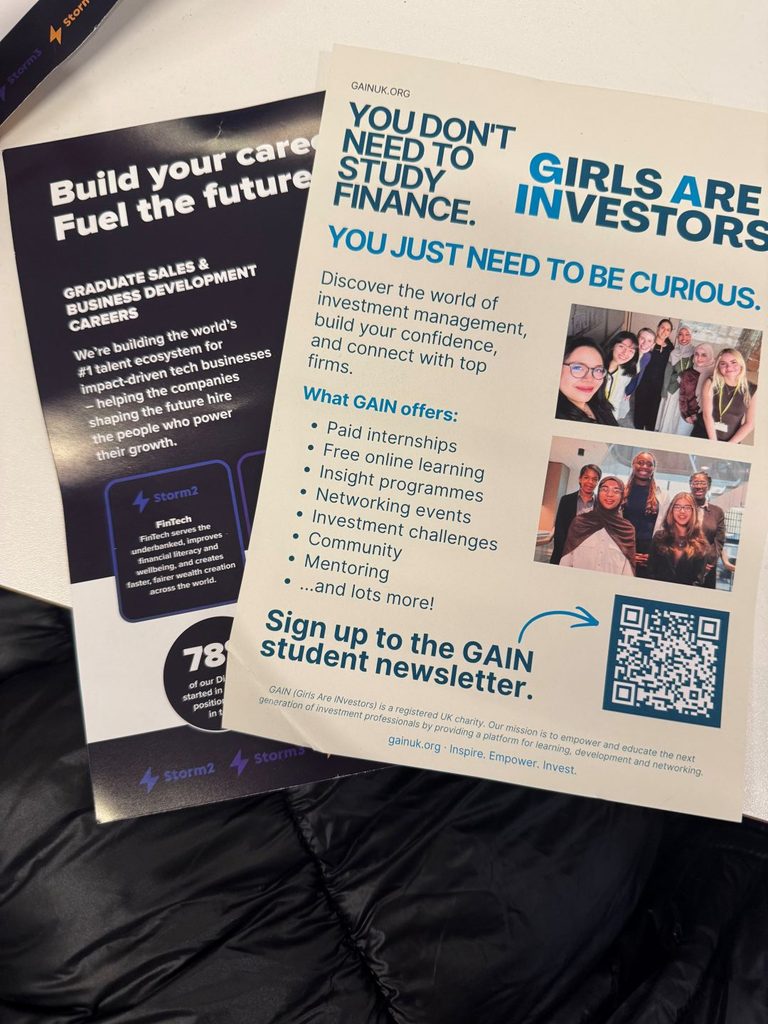
That said, the fair is best judged for what it is rather than what it promises. As a way to meet several employers at once and see how they present themselves, it works remarkably well. As a window into what working at those firms is actually like, it is more limited. Conversations are brief, popular stands draw crowds, and the setting is designed to impress, so the most revealing answers rarely surface in a few minutes. These are limits of the format rather than the event, but they mean the real value lies less in the afternoon itself than in what students do with it. Those who arrive with clear questions and follow up afterwards will gain a great deal; those who simply walk the room will mostly leave with pens. I came away with a positive impression, helped by how willingly everyone answered questions, and I’m now following up with the people I met and researching the firms and the wider industry more closely. To anyone who feels unready or intimidated, I’d say go regardless, but treat the afternoon as a starting point, not the destination.
Discover more
Career, Employability and Enterprise Centre
Create your own personalised prospectus here
Follow our students on Instagram, TikTok and YouTube