

What made you choose archaeology at Durham?
I have always had an interest in history, but the idea of sitting in a lecture theatre being talked at bored me. I wanted to get my hands on the history I was learning about. Being able to discover the history and touch things that haven’t been touched for centuries really appealed to me. When I was younger, my dad always joked that I’d become an archaeologist when I grew up and that someday I’d find the lost city of Atlantis. As for choosing Durham, I was mostly attracted to the castle and the cathedral, namely the history behind them and the architecture. I loved the course too; you get actual experience in the field, which is fantastic.
How did you end up working on the archaeological finds at Durham Castle?
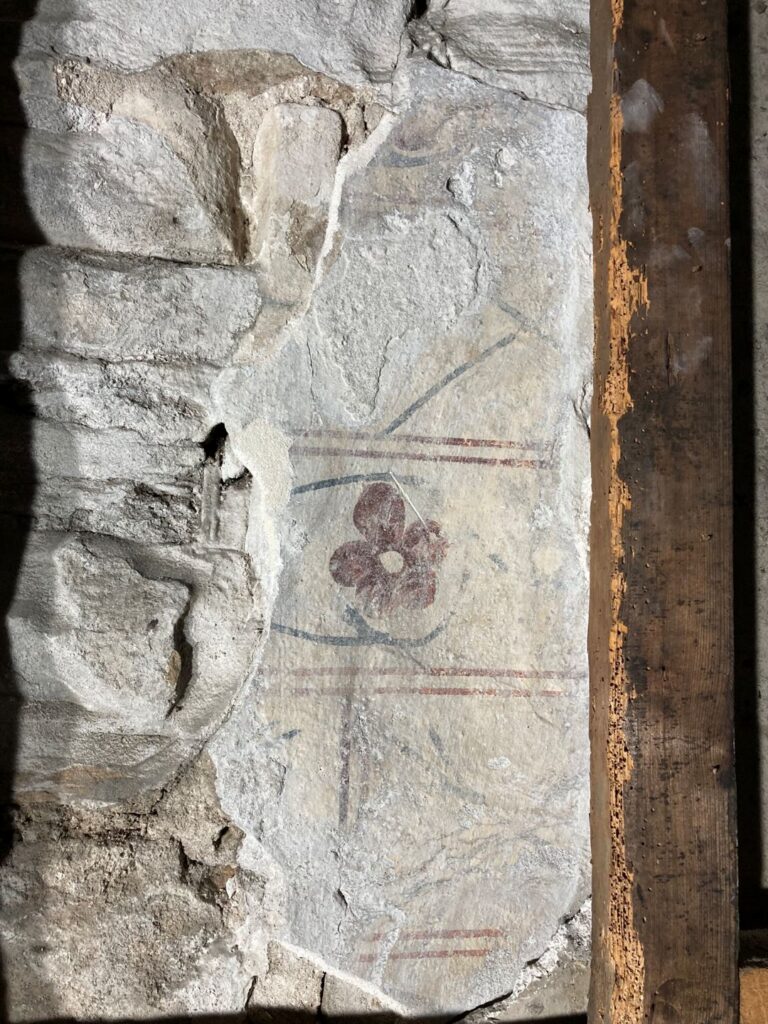
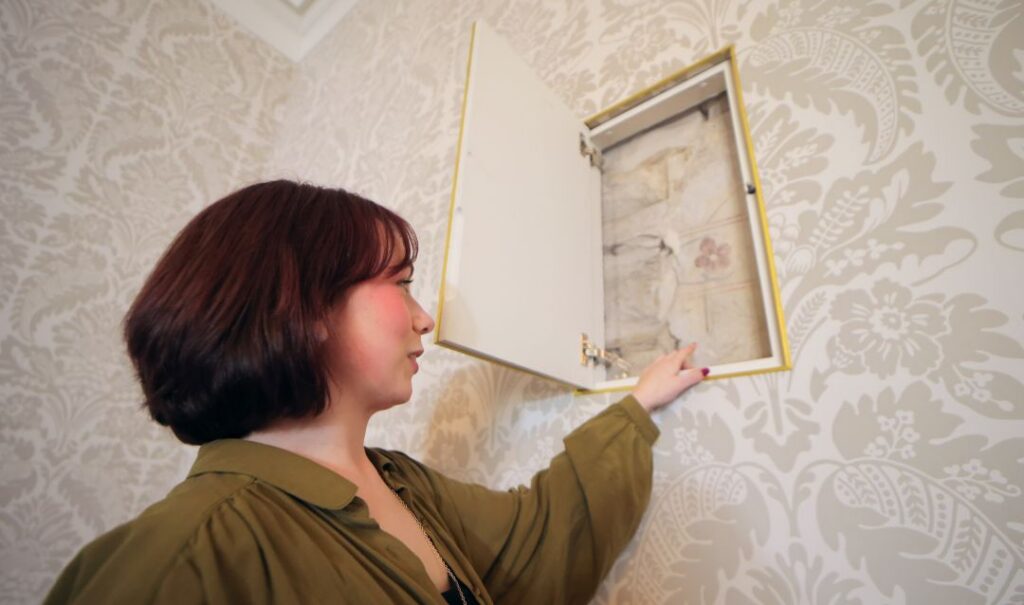
Last term, I decided to change the focus of my studies from classical archaeology to medieval archaeology after a particularly insightful lecture. After a slight panic with my academic advisor, I signed up to volunteer with some building recording in the castle. I did a few sessions simply recording the walls behind the 20th-century panelling. Despite it being tedious at times, it was a fascinating experience. We discovered some other medieval features as well as the wall painting, such as the blocked windows on the south wall. It’s exciting to find something that hasn’t been seen for centuries, to be the first person to look at and touch it in hundreds of years.
What do you find interesting about this find?
I find the painting itself very interesting. On the petals of the flower motif, you can still see the brush strokes. I wonder if the painter ever imagined that their work would survive centuries, and seven hundred years later someone would be writing a blog about their painting? It really makes the art human; it’s easy to visualise somebody standing in front of that wall, creating this beautiful piece of artwork. In addition to this, you get a sense of what the whole room looked like during this time. Were all the walls decorated with this flower motif? Was one wall decorated differently from the others, like a feature wall? Was each wall split into sections, each with a separate design?
What other finds have you worked on during your time here?
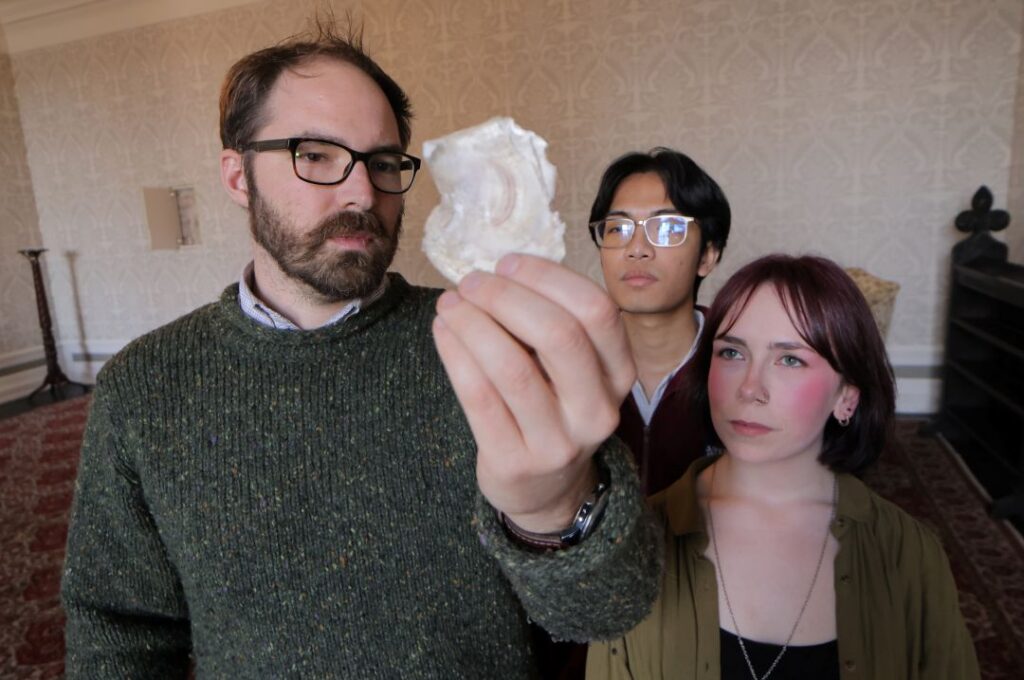
Last summer, I excavated at Bishop Auckland, which was my first dig. The first few days were hard; I wondered if I had taken the wrong course, but a few days in, I was enjoying it. We excavated part of the medieval garden wall on the north terrace of the palace. That was probably the most exciting find in our trench. We excavated a lot of animal bones and oyster shells, so mostly kitchen waste, someone did find a medieval jetton – a counter or token – on the north side of the wall. Overall, the excavation was a wonderful experience, and I got a sense of what being a field archaeologist is like. I think it’s important to gain these experiences, especially when doing a subject you have never studied before. Before this dig, I didn’t know how much physical labour went into excavation. I assumed most of it was done for us; we just found the good stuff!
Discover more
Discover more about the Durham Castle Research Group, part of our Heritage 360 project.
Feeling inspired? Take a look at our Archaeology Department
Download our latest prospectus and college guide here.
To see more of Durham student life, follow The Durham Student on Instagram, TikTok and YouTube.